Coil Loop Gap Calculator
Size the coil loop and feed slack between the straightener and feeder to keep material tension-free.
Using this calculator responsibly
The Coil Loop Gap Calculator is an engineering aid for checking a shop-floor estimate before a setup, quote, or process review. Enter values in the units shown, confirm material properties against the applicable specification, and keep a record of the assumptions used. Calculator output does not override machine capacity, tooling limits, part requirements, or a qualified engineer's approval.
Before using a result in production, repeat the calculation with the extreme values allowed by the print or process window. Check that the selected material, thickness, geometry, and safety factor reflect the actual job. If a result approaches a press, die, fastener, or machine limit, stop and verify it with the equipment manufacturer or responsible engineer.
Inputs and results
Read every field label before entering data and avoid mixing inch and metric values. A useful result should be traceable to the job number, revision, material certification, and machine or tooling record. Treat warnings, invalid ranges, and unusual outputs as reasons to inspect the inputs rather than as values to work around.
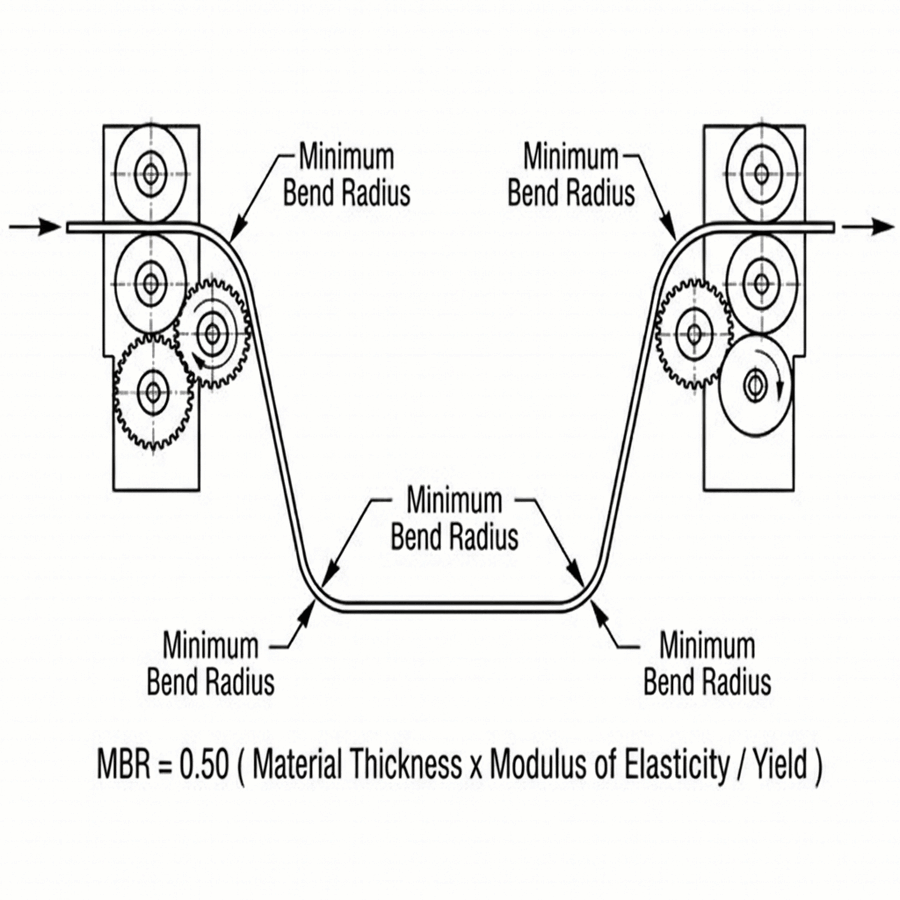
A slack loop between the straightener and the feed decouples the heavy coil from the precise feed motion. Too little loop puts tension on the feed and snaps stock; too much drags the floor.
Size the loop pit so it always holds enough slack for the feed to pull freely at full speed.
Formula: Loop must hold ≥ one feed progression of slack at all speeds
Worked example
- At 1.5 in progression and high stroke rates, keep at least several inches of free loop depth.
- Verify the loop never goes taut against the straightener during the fastest feed.